
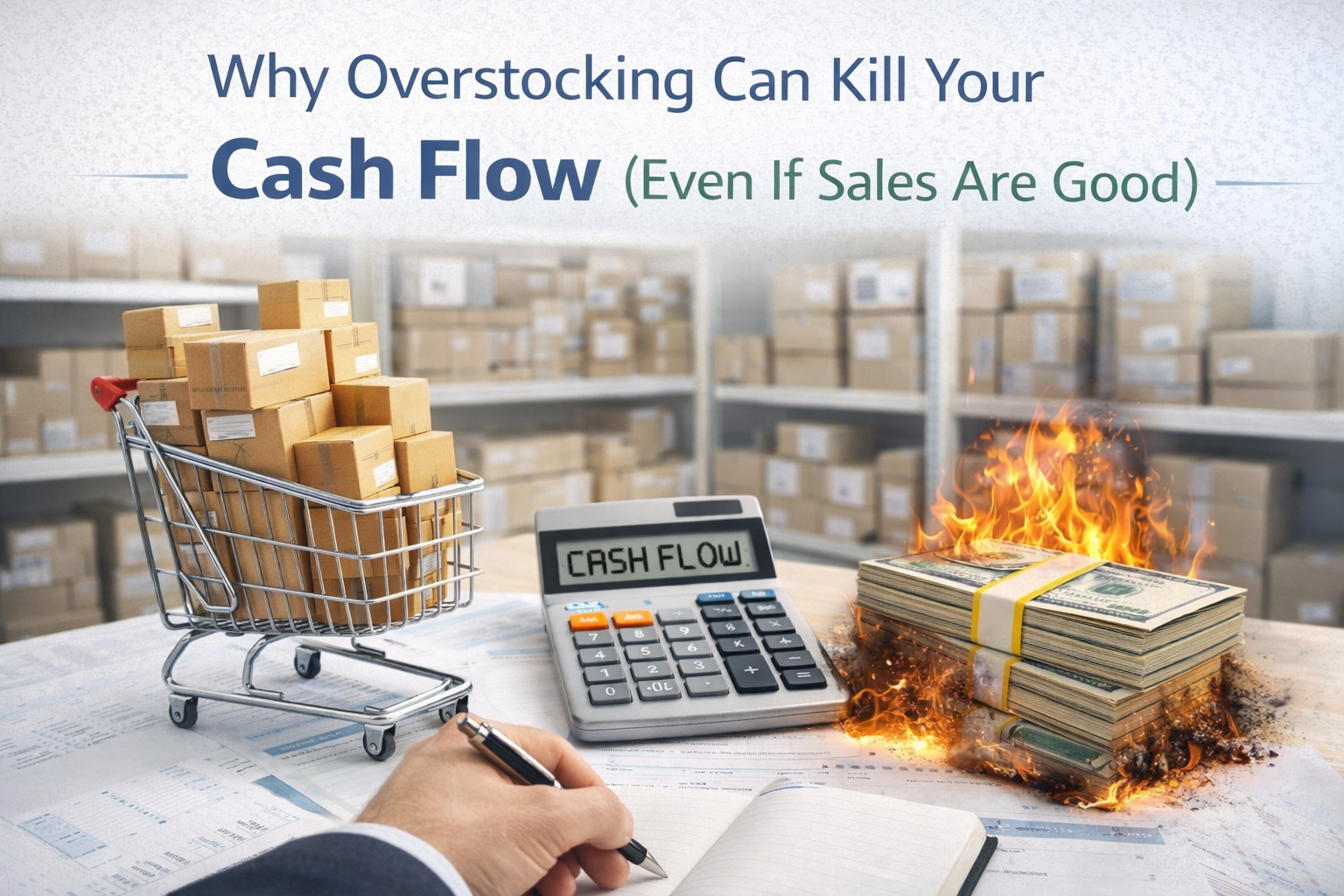
Let’s paint a picture. You see a supplier offering a discount: “Buy 1,000 pieces and save 15%!” Sounds smart, right? You think: “I’ll save money. And I’ll never run out of stock.” So you buy!! Your store looks full. Your warehouse looks impressive. You feel prepared. But your bank account? Very quiet. Very empty. Welcome to the overstocking trap.
What Is Overstocking (In Normal Language)?
Overstocking simply means: You bought more inventory than your business actually needs right now. That extra stock is not profit. It’s cash sitting on shelves. Not moving. Not earning. Just… existing.
Here’s The Real Problem
Inventory is not free. When you buy stock: Cash goes out. And until that stock sells… Your money is stuck. Imagine this: You buy goods worth 500,000. You haven’t sold them yet. That 500,000 is now boxes in a storeroom. You can’t use it to:
- Pay rent
- Pay salaries
- Invest in marketing
- Fix emergencies
It’s frozen. “But It’s an Asset, Right?” Yes. Technically. But here’s the truth: Assets don’t pay your electricity bill. Cash does. You can’t call your landlord and say: “Don’t worry, I have 300 unsold jackets.” They want money. Not stock.
How Overstocking Slowly Hurts You
It doesn’t hurt loudly. It hurts quietly. Here’s how:
1. Cash Flow Gets Tight
You have sales. But no liquid cash. Because you already used it to buy too much stock.
2. Discounts Start
Stock isn’t moving fast. So you start discounting. Now your profit shrinks.
3. Old Stock Becomes Dead Stock
Trends change. Products expire. Fashion shifts. Technology updates. Now you’re stuck with items nobody wants. That’s money gone.
Example Time
Let’s say: You normally sell 200 units per month. But you buy 1,000 units because it was “cheaper.” That’s 5 months of stock. What if:
- Demand drops?
- A competitor opens?
- A better product enters the market?
Now your cash is trapped in slow-moving goods. And you start feeling pressure. Not because business is bad… But because cash is locked up.
The Emotional Side (No One Talks About This)
Overstocking often comes from fear.
- “What if I run out?”
- “What if customers get angry?”
- “What if I miss sales?”
So you overbuy to feel safe. But safety in inventory can create danger in cash flow. And cash flow problems are way more stressful than stock shortages.
Smart Businesses Think Differently
They ask:
- How fast does this product sell?
- How long will it take to reorder?
- Do I really need this much?
- Is the discount worth freezing my cash?
They buy smart. Not emotional.
A Healthy Mindset Shift
Instead of thinking: “Full warehouse = strong business.” Think: “Healthy cash flow = strong business.” A lean, fast-moving inventory is powerful. Cash flowing in and out smoothly? That’s stability.
Final Thought (The Happy Ending )
Stock is important. But cash is oxygen. You can survive a few days without stock. You cannot survive without cash!! So don’t let discounts tempt you. Don’t let fear control buying. Don’t let shelves decide your strategy. Buy smart. Track movement. Protect your cash. And when your cash flow feels smooth and steady? Business suddenly feels lighter. Less stress. More control. More confidence. And that’s a much better feeling than a warehouse full of boxes